
PA Students Get Hands on Experience - Gabby Clancy, PA-S
Since early summer 2025 we have been welcoming Physician Assistant Students (PA-S) to complete their clinical rotations at Culmore Clinic.
The Culmore Clinic was recently fortunate to be graced with our latest Physician Assistant Student, Gabby Clancy, PA-S.
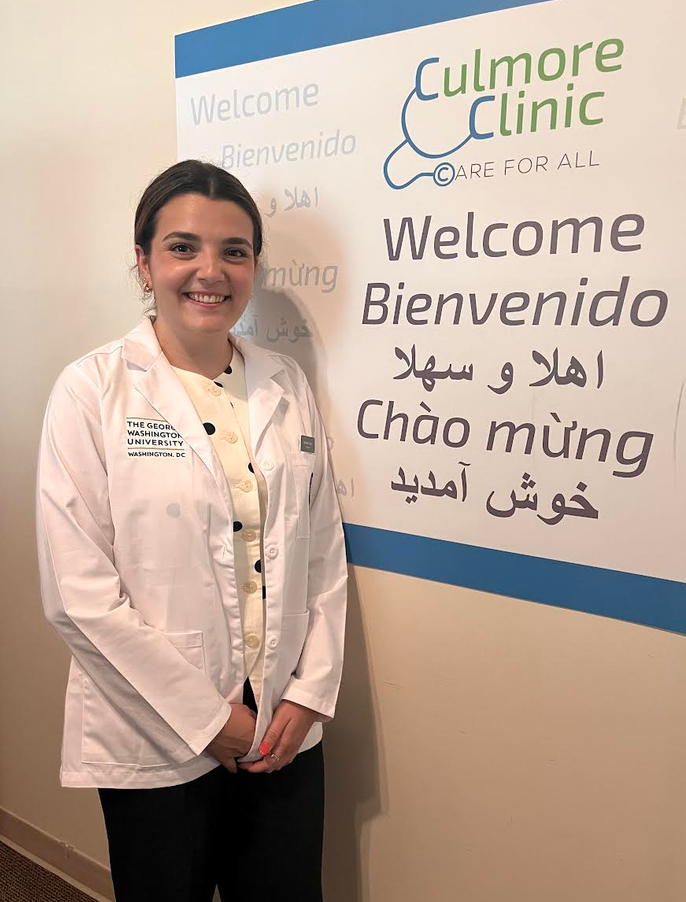
We recently caught up with Gabby to chat about her experience at Culmore Clinic and what she has learned throughout her time with us.
1. What was the most meaningful patient interaction you had during this rotation, and why did it stand out to you?
One patient interaction that stands out to me during my time at Culmore Clinic was a visit that was medically straightforward but emotionally and contextually much more complex than it initially appeared. The patient presented for a routine follow-up after an emergency department visit several months prior. What initially seemed to be a simple fall in the snow evolved, over the course of the visit, into a situation shaped by significant psychosocial stressors that required a thoughtful and trauma-informed approach to care. Although the patient was recovering well from a physical standpoint, it became clear that their emotional and psychological recovery required equal attention. Taking the time to listen, validate their experience, and address concerns beyond the immediate physical complaint was essential to providing appropriate care. This encounter reminded me that patients often present during some of their most vulnerable moments, and that effective care requires looking beyond the chief complaint to understand the broader context of their health. It was a powerful reminder of the responsibility and privilege of supporting patients not only medically, but also as they navigate difficult life experiences.
“It was a powerful reminder of the responsibility and privilege of supporting patients not only medically, but also as they navigate difficult life experiences.”
2. Can you describe a clinical challenge you encountered and how you managed or learned from it?
One clinical challenge I encountered during my time at The Clinic was obtaining an accurate and comprehensive history while working through interpreters and navigating language barriers. Understanding details such as medication refill timelines, symptom progression, specialist consultations, and recent emergency department visits was often more difficult when communication required multiple layers of interpretation. I quickly realized that my usual approach to history-taking was not always effective in these situations. I adapted my communication style by asking shorter, more focused questions, avoiding unnecessary medical terminology, and rephrasing questions when needed to ensure mutual understanding. These adjustments improved the accuracy of the histories I obtained and helped foster stronger connections with patients. Through this experience, I learned that effective communication involves far more than simply translating words. Patients have varying levels of health literacy, cultural backgrounds, and personal experiences that shape how they understand and discuss their health. Recognizing these differences taught me to approach patient interactions with greater patience, curiosity, and adaptability. This experience strengthened my ability to communicate across linguistic and cultural barriers and highlighted the critical role that clear, patient-centered communication plays in clinical care.
3. After serving patients at Culmore Clinic, how might you adapt your practice style?
My experience at Culmore Clinic reinforced that effective healthcare extends far beyond the diagnosis and treatment of disease. Patient-centered care requires recognizing that no clinical guideline can fully account for the diverse realities patients navigate outside the exam room. Each individual brings a unique set of personal, social, and economic circumstances that shape their health and influence their healthcare decisions. Providing high-quality care therefore demands adaptability, thoughtful problem-solving, and a willingness to meet patients where they are. These experiences highlighted the importance of balancing evidence-based recommendations with an understanding of each patient's unique circumstances to develop treatment plans that align with their needs, priorities, and lived experiences. As a provider, I hope to not only continue expanding my medical knowledge but also strengthen my ability to apply that knowledge in ways that are meaningful, practical, and responsive to the realities of patients' lives.
4. What aspect of care during this rotation do you want to share with others as you move on to future rotations?
As I move forward into future clinical rotations, I hope to carry with me and share the importance of viewing patient care through a comprehensive, whole-person lens. During my time at the clinic, I had the opportunity to train in a primary care setting that emphasized understanding every aspect of a patient's health, from preventive care and chronic disease management to the social and personal factors influencing their well-being. Rather than focusing solely on isolated symptoms or diagnoses, providers worked to address concerns comprehensively and pursued all appropriate avenues of care before referring patients to specialists. This approach demonstrated the value of treating the whole person rather than focusing solely on a disease or diagnosis. I saw firsthand how much patients appreciated feeling heard and knowing that their providers were committed to addressing their needs holistically.
5. As a medical learner, what strategies did you use to build trust and communicate effectively with patients who may have never seen a student practitioner?
As I began my first clinical rotation at The Clinic, I recognized that some patients may be unfamiliar with working with a student practitioner and may initially be uncertain about my role in their care. To build trust, I leveraged the unique opportunity afforded to me as a student to spend additional time with each patient. Before every visit, I thoroughly reviewed their medical history and prior clinical encounters, allowing me to ask informed questions and demonstrate a genuine interest in their individual experiences and concerns. I focused on ensuring that patients felt heard, taking the time to address questions that might otherwise go unanswered. At the end of visits, I also prioritized patient education, explaining diagnoses, treatment plans, and next steps in clear and understandable language. By approaching each interaction with preparation, curiosity, and empathy, I was able to foster meaningful connections with patients and help them feel comfortable, understood, and actively engaged in their care.