
PA Students Get Hands on Experience - Part VI
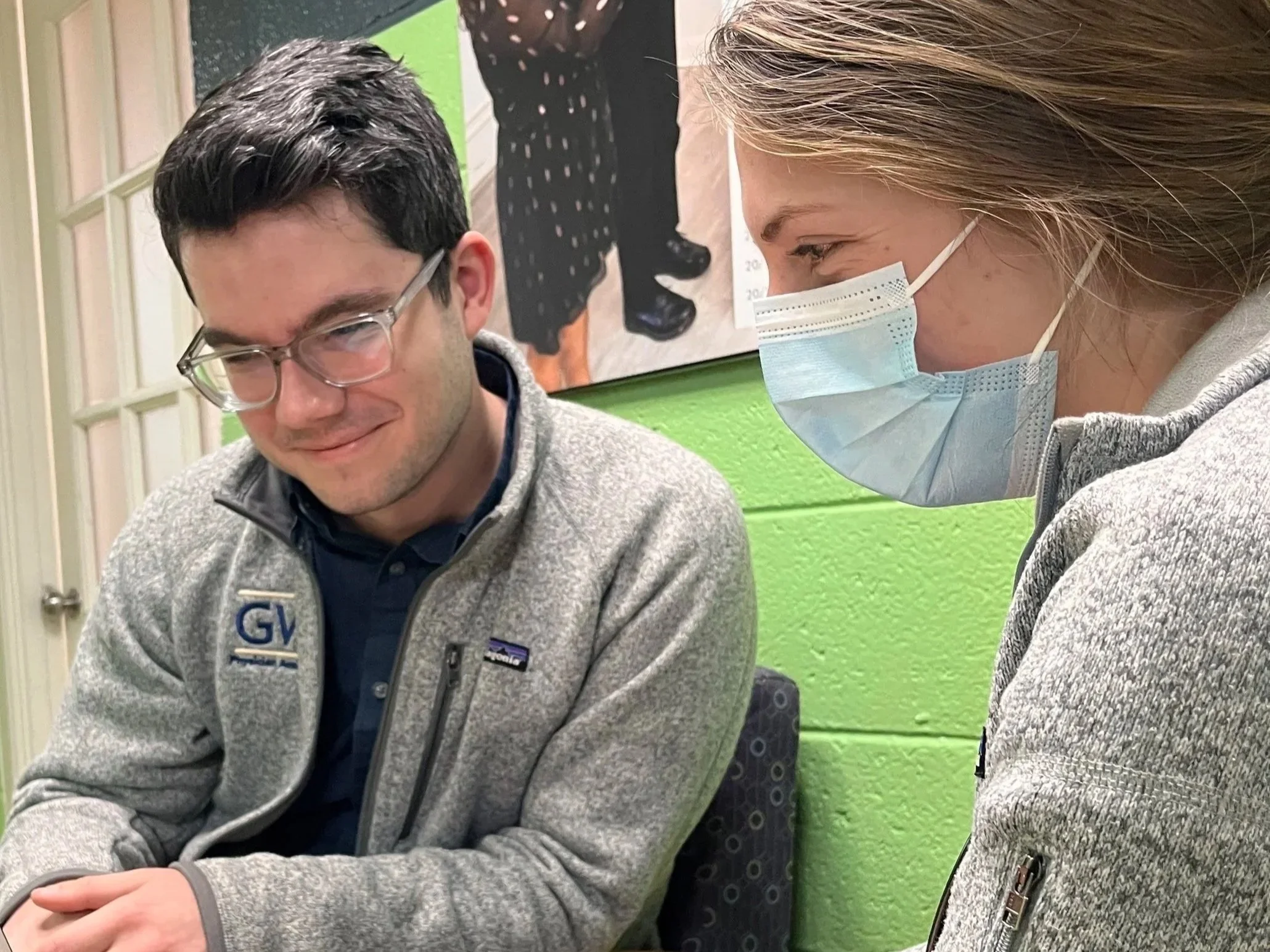
Since early summer 2025 we have been welcoming Physician Assistant Students (PA-S) to complete their clinical rotations at Culmore Clinic.
The Culmore Clinic was recently fortunate to be graced with our latest Physician Assistant Student, Luke Guonjilan-Pettit. Luke came to us as an undergraduate from the University of Maryland where he is seeking a Double Degree in Biology and Public Health Science with a Minor in Music Performance.
We recently caught up with Luke to chat about his experience at Culmore Clinic and what he has learned throughout his time with us.
What was the most meaningful patient interaction you had during this rotation?
Shortly after I began leading patient encounters, I had a very memorable moment with a patient who came to The Clinic with the impression that she was to see one of our eye doctors. She complained of eye blurriness, intermittent in nature, over the past month. As it turned out, she was scheduled to see me. Although I am not an eye doctor, I still had the opportunity to gather a detailed history and perform a physical exam to formulate an assessment and plan. The patient and I soon came to realize that her eye blurriness was almost certainly secondary to unmanaged depression, as she reported that "my eyes are only blurry when I cry."
She reported being out of work for the past month which created significant emotional distress. I conducted a point-of-care PHQ-9 which was concerning for moderate depression with significant impairment. After a more in-depth psychiatric interview, and after working with the patient to develop a plan, we ultimately decided on initiation of an antidepressant along with referrals to see Culmore Clinic's counselor, social worker, and optometrist. What was thought to be an appointment with an eye doctor turned out to be a very meaningful encounter with someone who had never received management of her mental and emotional health before. Each and every encounter with patients at The Clinic is unique and you never know who you will have the privilege of seeing.
How did this rotation influence your understanding of interprofessional collaboration in healthcare?
The Culmore Clinic has demonstrated the value and utility of interprofessional collaboration and fundamentally deepened my understanding of a team-based approach to care. Each of us offer sincere utility in not only pursuing ideal health outcomes but also in connecting with and caring for the entire patient. All those who engage with patients, whether they may have decades of experience as an attending physician or a budding pre-professional volunteer, have the opportunity to offer their time and effort to improve both the objective and subjective outcomes of the patient's appointments. Here at the Culmore Clinic, we are very fortunate to have a wide array of specialists to consult for higher-complexity patients as well as a robust pool of volunteer nurses, interpreters, and students, each of whom plays an invaluable role in patient care.
After serving patients at Culmore Clinic, how might you adapt your practice style?
After my experience with the Culmore Clinic, I have come to appreciate the unique complexities that exist within each of our patients' lives which necessitate flexibility and creativity from myself as a provider. Healthcare is by no means a one-size-fits-all experience which, in addition to our clinical training and memorization of a seemingly infinite number of guidelines, asks that providers think critically to formulate the most pragmatic plan of care for each patient. In building relationships with our patients, we earn the privilege of learning about their lives which provides the opportunity to tailor our guidance and recommendations to the specific patient, rather than a specific lab value or imaging result.
What aspect of care during this rotation do you want to share with others as you move on to future rotations?
The most impressive part of this rotation that I plan on sharing with future students who rotate at The Clinic is the genuine kindness and support offered by each and every staff member and volunteer. From the very first day, I was encouraged to ask questions and learn as much as I could about the operations of The Clinic, insight into the patient population, and recommendations for patient care. For many students, rotations typically start with a mix of trepidation, excitement, and uncertainty. Although I was no exception, I was fortunate to be met with warmth and kindness which fostered a wonderful learning environment. I encourage future students to embrace the energy present at The Clinic and make the very most of this opportunity.
As a medical learner, what strategies did you use to build trust and communicate effectively with patients who may have never seen a student practitioner?
Although I, as a student, may lack the depth of clinical experience that many of our attending physicians have, I’ve had a wonderful opportunity to connect with patients in a way that creates meaning and resonates deeply with those whom I engage. Indeed, in this role, I often have more time to spend with patients which cultivates greater rapport and trust. This freedom, coupled with the resources available to me through preceptorship and specialist volunteers, offers a best-of-both-worlds approach. Patients appreciate the time and energy which I dedicate on their behalf as well as the knowledge that my decision-making is supervised and vetted by those with greater expertise.