
PA Students Get Hands on Experience - Gabby clancy, PA-S
Since early summer 2025 we have been welcoming Physician Assistant Students (PA-S) to complete their clinical rotations at Culmore Clinic.
The Culmore Clinic was recently fortunate to be graced with our latest Physician Assistant Student, Rodney Sadberry, PA-S2. Rodney came to us as a second year PA Student at George Washington University’s School of Medicine & Health Sciences.
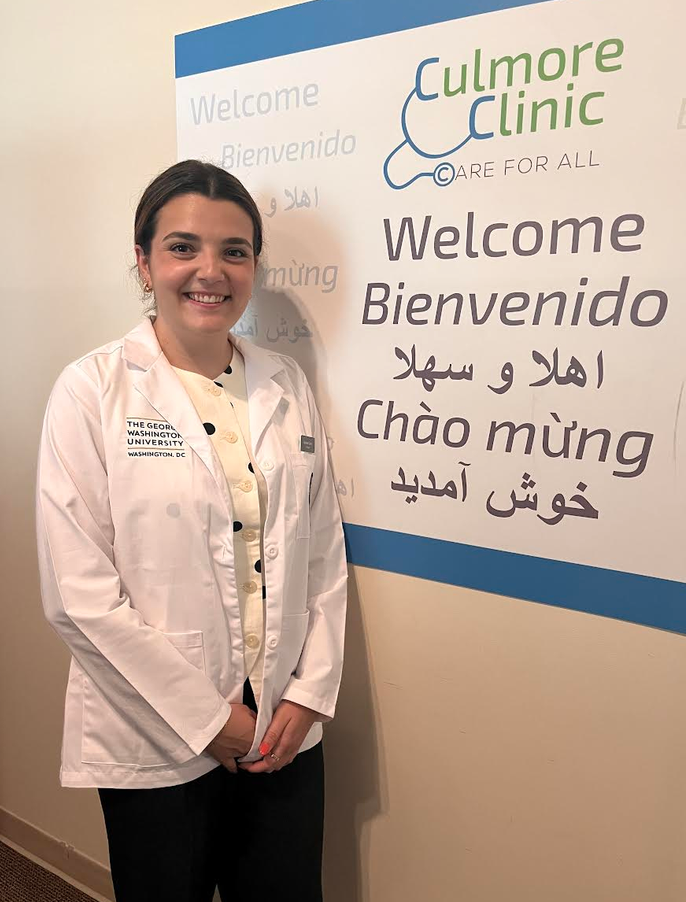
We recently caught up with Rodney to chat about his experience at Culmore Clinic and what he has learned throughout his time with us.
How did this rotation influence your understanding of interprofessional collaboration in healthcare?
This rotation highlighted how essential true teamwork is in delivering effective care. Working alongside various healthcare professionals showed me that each role brings a unique perspective, and patient outcomes improve when communication is clear and collaborative. I saw firsthand how shared responsibility and mutual respect create a more efficient and supportive care environment.
After serving patients at Culmore Clinic, how might you adapt your practice style?
I would prioritize a more patient-centered and resource-conscious approach. This experience reinforced the importance of simplifying care plans, focusing on high-yield interventions, and being mindful of cost and access barriers. I also aim to spend more time ensuring patients truly understand their conditions and treatment plans.
How did working with uninsured and immigrant patients shape your understanding of healthcare access and equity?
It deepened my awareness of how structural barriers like cost, language, and fear of navigating the healthcare system can delay care. I saw how these challenges lead to more advanced disease at presentation which emphasizes the importance of accessible, community-based care in promoting equity.
As a medical learner and non-Spanish speaker, what strategies did you use to build trust and communicate effectively?
I relied heavily on interpreters, used simple and clear language, and paid close attention to nonverbal communication. I also focused on introducing myself clearly, explaining my role, and taking time to listen. Even small efforts to connect respectfully helped to build trust despite language differences.
What did you learn about the role of community-based clinics in filling healthcare gaps for marginalized populations?
Community clinics play a critical role as both a medical and social safety net. Beyond simply providing care, community clinics help bridge gaps by offering continuity, culturally sensitive services, and connections to resources. They are often the first (and sometimes only) point of access for vulnerable populations.